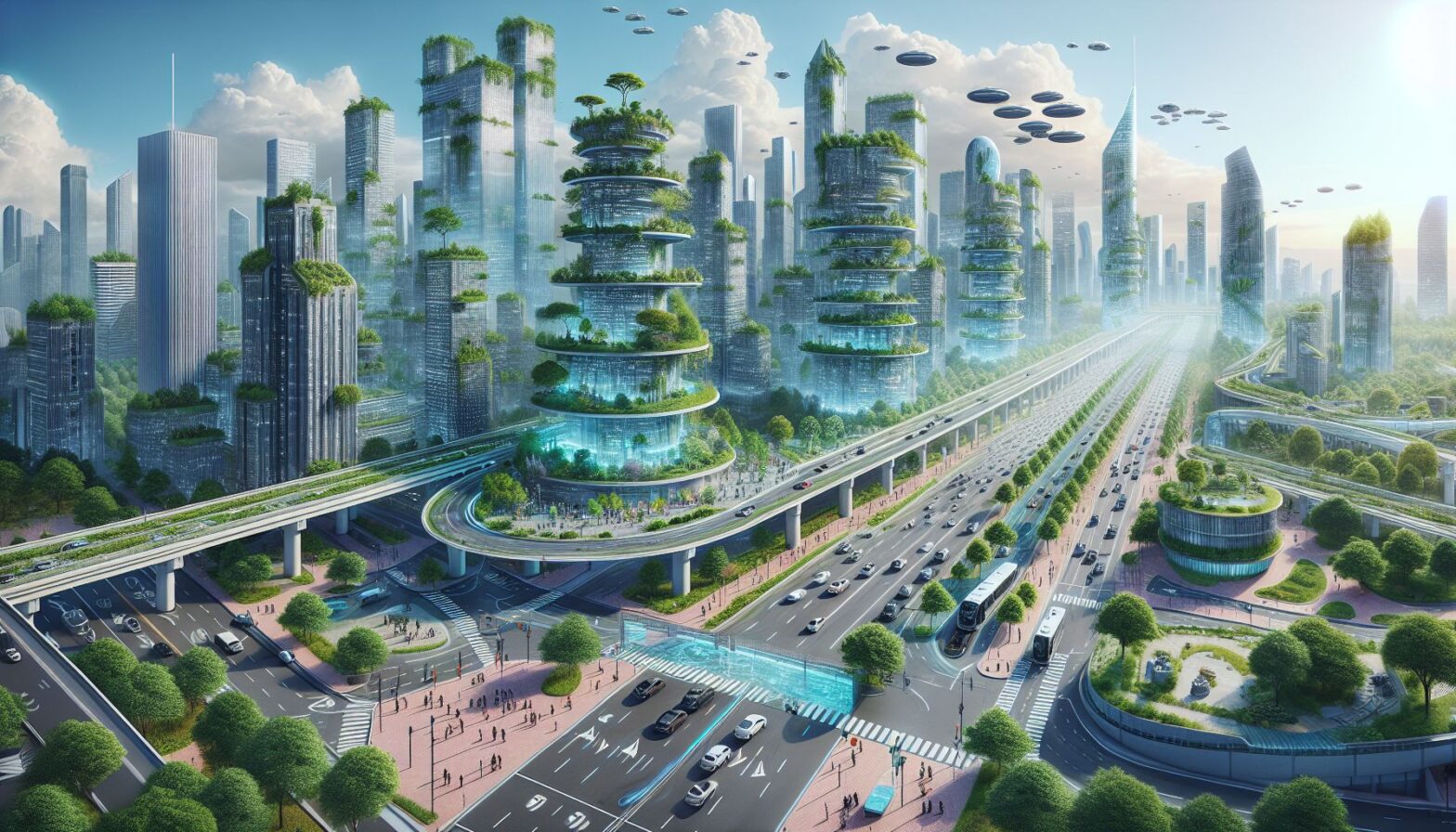
Urban living: love it or hate it, we can’t deny how important it is in the modern world. With more people flocking to cities every year, tech enthusiasts like us are constantly on the lookout for ways technology can enhance urban life. Lately, I’ve stumbled upon something truly fascinating, the concept of self-healing cities. Picture cities that can address their own issues, whether it’s a pothole or air pollution, without human intervention. Crazy, right? But it’s more real than you think.
How Did We Get Here?
You might be wondering how we jumped from standard city maintenance crews to cities that fix themselves. Well, it all comes down to major advances in sensors, AI, and robotics. Remember when we had to rely on human eyes alone to detect a needed repair? Thanks to machine learning algorithms and IoT devices, cities can now ‘see’ and ‘hear’ themselves, which is kind of eerie but undoubtedly cool.
From Smart to Self-Healing
First off, think about the smart city initiatives we’ve seen pop up in places like Barcelona and Singapore. They’ve been laying the groundwork for self-healing capabilities by integrating a network of sensors across transportation, utilities, and even waste management systems. The leap from smart to self-healing involves automating solutions to the problems these networks identify.
For instance, imagine a scenario where a sensor in the road detects an emerging pothole (thanks to IoT). A nearby drone gets dispatched with the materials needed to fix it. The entire operation could be completed in less time than it takes you to finish your morning coffee! The effects on traffic and safety are huge.
The Role of AI: Our Digital Urbanist
Just like kids need teachers, cities need AI to manage their many moving parts. Artificial Intelligence isn’t just another cog in the machine, it’s the conductor making everything work in sync. Let’s look at some areas where AI really shines when it comes to creating these self-healing urban environments.
Predictive Analytics
Predictive analytics is the forecasting wizard that uses past data to make future predictions. Imagine a city that knows exactly when and where an issue might pop up before it actually happens. AI uses loads of data collected from various parts of the city and applies algorithms to predict issues with surprising accuracy. This means repairs can be planned and executed ahead of time, practically magic!
Efficient Resource Allocation
Then there’s the challenge of efficiently allocating resources. Self-healing capabilities don’t just mean fixing things. They mean doing so in the smartest, most economical way possible. AI-driven resource allocation models can automate decisions regarding which materials to use, which route is quickest, or which drone or robot is free to tackle the job. It’s basically the city’s invisible logistics manager.
Robotics: Boots on the Digital Ground
Robots will be the hands and feet of our beloved self-healing cities. We’re talking drones in the sky, bots on the trash heap, and automated vehicles zipping through the concrete jungle. It’s a metropolis full of Wall-E’s cousins, now there’s a Pixar crossover I’d pay to see.
Drones and Droids: The Repair Agents
This one’s my favorite—drones hovering over city landscapes, immediately addressing structural issues as they arise. UK researchers are developing drones designed to carry out repairs on infrastructure, aptly titled ‘flying robots for urban maintenance’. Although as a sci-fi geek, my mind jumps straight to Terminator scenarios, these drones are thankfully here to build, not to destroy.
On land, we have repair bots that specialize in a wide array of tasks. Think of them as Swiss Army knives on wheels, capable of sealing road cracks or even replenishing the soil for urban greenery. The concept is similar to your neighborhood handyman, but way cooler.
Challenges on the Path to Utopia
Okay, I know things are starting to feel too good to be true, so let’s put on our realist hats for a second. While the advances are exciting, it’s not all rainbows and fully automated unicorn cities, yet.
High Initial Investments
This paradise doesn’t come cheap. The tech infrastructure required for such transformational urban changes can be financially daunting. We’re talking millions, perhaps billions in research, hardware, and implementations. The ROI over time may justify the expenditure, but it’s the initial costs that could deter even the most forward-thinking municipalities.
Data Privacy Concerns
Let’s not forget Big Brother lurking around the corner. More sensors equal more data. Making sure that citizens’ data privacy is respected and protected becomes essential. There’s also the worry about hacking or data breaches, the last thing we want is cities held hostage by cybercriminal overlords!
Public Acceptance
Oh boy, getting residents on board can be harder than explaining Bitcoin to your grandma. We humans are famously resistant to change, especially when it comes to robots replacing what has traditionally been a human role. Convincing the public that self-healing cities are a safe and beneficial addition is a PR mission in its own right.
The Road Ahead: When Do We Get There?
So, when do we start living in these amazing, self-healing cities? Truth be told, we are likely still a few decades out from seeing fully autonomous urban landscapes. Bits and pieces are being tested and implemented as we speak, but it’s going to take time for society and technology to catch up with this vision.
Building Collaboration
For one, collaboration is key. Governments, tech companies, and citizens all need to work together. We’re seeing some positive trends on this front, with conversations across the globe increasingly focused on smart-city policies and frameworks.
Technological Evolution
Of course, faster computing power, more sophisticated AI models, and cheaper sensor technologies will only speed up the dream. Add to this continued innovations in battery life, machine learning, and cybersecurity, and the pieces begin to come together.
Looking Beyond
Imagine a world where your morning paper talks about neighborhoods that heal from storm damage overnight or roads that mend themselves during off-peak hours. The scope for innovation is limitless, pointing us toward a vision where cities truly care for their inhabitants in real-time.
So, keep your eyes open, maybe even contribute your talents and ideas, because who knows, you might just be the one to play chess with the Queen’s Gambit AI over a rebuilt Brooklyn Bridge someday.
In wrapping up, I think it’s safe to say the future is outrageously exciting, if a bit daunting. Who’s with me on this wild, urban ride? Let’s build, break, and repair our way to a techno-utopian paradise!