Exploring the New Frontiers: Artificial Intelligence in the Creative Arts

Hey tech aficionados and curious minds! πŸ™‹β€β™‚οΈ Ever wondered what happens when mad scientists (in a good way, of course) blend the tech world with the arts? Yeah, I’m talking about Artificial Intelligence taking a leap into the realm of creativity. After years of being typecast as the geeky sidekick that does all the boring data crunching, AI is finally coming into its own, adding flair and pizazz to the world of art and music. Grab your favorite beverage and let’s dive into this electrifying topic!

Who Said Robots Can’t Paint?

Let’s face it, when we think about AI, we often imagine it doing complex calculations or running futuristic factories. But AI’s not just about numbers anymore. Lately, it’s become the digital Picasso we never knew we needed. Seriously though, there are algorithms out there that can create paintings, and not just any paintings, but ones that sell for millions.

Take, for example, the famous artwork created by an AI called “Edmond de Belamy” which was auctioned for a whopping $432,500 at Christie’s. Mind-blowing, right? What’s captivating here is how AI learns from thousands of existing artworks to create something uniquely its own. It’s as if AI has a soul, or at least an appreciation for fine art.

Making Music with Machine Learning

Now, onto another creative frontier: music. If you thought AI couldn’t jam, you’d be in for a surprise. Some people were skeptical about AI’s ability to write a catchy tune. But guess what? AI is doing just that!

A key player on this stage is OpenAI’s MuseNet, a deep neural network that generates 4-minute musical compositions with 10 different instruments. It’s capable of hitting every note spot on and even mimics the styles of renowned composers. From Beethoven to The Beatles, MuseNet can adapt and innovate so fluidly that it’s almost as if it’s having a full-fledged jam session with the maestros themselves.

The Marriage of Pixels: AI in Film and Animation

Ever had a creative idea in your head so big it needed blockbuster-level special effects to express? Enter AI! It’s revolutionizing the film industry by making CGI more accessible and realistic. Tons of movies today use AI for everything, from creating digital characters to enhancing VFX sequences.

One standout example is the use of AI to de-age actors. Think of a young Robert De Niro in “The Irishman.” The magic here rested on AI systems trained on mountains of visual data, allowing filmmakers to warp time itself without breaking a sweat. It’s like Benjamin Button with an upgrade, rejuvenation in high definition!

Bridging the Language Barrier, Poetic AI at Work

Let’s not leave out the wordsmiths! AI components, like natural language processing algorithms, are crafting compelling narratives, poetry, and even entire novels. The tool dubbed ‘GPT-3’ by OpenAI is quite the word magician, capable of spinning stories with such coherence and style that it’s easy to forget it’s a machine behind the keyboard.

Sure, AI’s not quite ready to pen the next Hemingway classic, but it’s getting pretty close. Imagine the day when AI co-authors your favorite sci-fi novel. Fascinating, isn’t it?

The Big Picture: Implications of Creativity in Code

While it all seems like a sci-fi dream come true, these AI developments raise thought-provoking questions. What does it mean for artists? Is AI an enriching companion or a threatening rival? There’s no denying that technology forces us to rethink creativity, a domain once thought to be quintessentially human.

In this changing world, my optimism rests in a collaborative future. Picture artists and AI working hand-in-hand, the latter working as an unusually talented paintbrush or musical instrument that expands our creative horizons.

Peeking into the Future: What Lies Ahead?

Looking forward, it’s anyone’s guess how far AI will push the boundaries of creativity. I imagine a future mixed reality art exhibit where AI-generated masterpieces evolve in real-time, responding to the viewers’ emotions captured through wearable tech. Possibilities are endless, limited only by our imaginations.

Until then, keep your AI art tools sharp (or at the very least fully charged) and your creative juices flowing. As they say in the tech world, “The future’s so bright, we gotta wear shades”, AI-generated shades, no doubt. 😎

Stay curious, stay creative, and most importantly, stay human!

P.S. Leave a comment below if you think an AI could paint like Van Gogh or would like to try creating music with MuseNet. Let’s ignite a conversation because who doesn’t love a good debate about robots taking over the art world?

Riding the AI Creative Tsunami: When Machines Pick Up the Brush

Hey friends, welcome back to this corner of the internet where we explore the juicy bits of technology that have us wide-eyed and buzzing with excitement. Grab a cup of coffee or your favorite snack because today we’re diving into the colorful world of Artificial Intelligence in the creative arts. This intersection of creativity and technology is like a double-shot espresso of innovation, both exhilarating and a bit mind-bending.

The Brushstrokes of Algorithms

Remember a few years back when everyone was skeptical about AI generating art? Well, fast forward to today, and we’ve got algorithms painting like Van Gogh during his most inspired nights. We’re seeing machines that don’t just assist in art creation. They’re in the creative driver’s seat.

Some of you might have heard of OpenAI’s DALL-E 2 or Google’s DeepDream. These aren’t just glorified filters. We’re talking about programs that, given the right nudge, can output genuinely mesmerizing pieces that could take home blue ribbons at your local art fair. I tried my hand at it the other day, feeding in prompts like “moonlit garden with neon giraffes” and got back surreal art that looked like a Salvador DalΓ­ fever dream.

Digital Renaissance: Can Machines Have Muses?

These developments get me thinking: can machines find their muses, or are they just random scribes in the hands of digital artists? AI lacks emotions (spoiler alert: no spontaneous robot poetry readings), but it’s darn good at experimenting and iterating at speeds we flesh bags can only dream of. It scans through historical art styles and remixes them, coming up with novel creations that make you wonder about the very essence of creativity.

I’ve heard from artists worried about AI taking over their jobs, but here’s my take, AI is more of a collaborative partner than a competitive threat. The real magic happens when human intuition meets machine precision. Think of it as a jam session where the guitarist and drummer sync so perfectly, the audience can’t help but dance.

Pencils, Paint, and Prompts: A New Palette

One of the wildest parts of this AI creative surge is how it’s democratizing art. Didn’t ace that life drawing class? No worries. With basic knowledge of how to type a creative prompt, anyone can essentially “paint” a masterpiece without needing to get intimate with palettes and brushes.

AI platforms, like Artbreeder and RunwayML, have made it so even Uncle Bob who still struggles with his Facebook profile picture can contribute to the art world. And let’s be real, there’s something delightfully cheeky when you tell an AI to craft a “whimsical fusion of steampunk and cubism” and it delivers a piece that Picasso himself might have wanted to hang on his wall.

The Multiverse of Tech Possibilities

Now, time to whip out the crystal ball and speculate about where AI art is headed. At the pace we’re galloping, it’s not far-fetched to think we’ll soon walk into museums holding exhibitions for robot artists. Who knows? We might see an AI win a Turner Prize in my lifetime. Crazy, right?

Let’s consider the commercial side too. Marketing moguls are already using AI’s power to generate ad content tailor-made to stir emotions with freaky accuracy. It’s like having Don Draper’s skill with data-crunching prowess of a hyper-intelligent supercomputer.

Painting the Future

Will we see AI entirely replace human artists? I doubt it. While machines can paint, they lack the wild imagination and emotional depth that make a piece of art resonate. Human artists will always have the upper hand in capturing the nuance of the human condition, those sticky, unpredictable bits of being alive that machines, in all their glory, just can’t feel.

In the future, AI will be more than crayons in our creative toolkit. It will be there for inspiration, experimentation, and collaboration, guiding us into artistic realms we haven’t dared to dream yet. It’s a wild time to be alive, especially if you’ve got a penchant for creativity and tech. This partnership between human and machine is just beginning with each brushstroke scanned and every pixel computed. So, fellow art lovers and rebels at heart, let’s strap in for this ride and see what masterpieces we can conjure up together!

Until next time, keep dreaming, keep creating, and never let anyone convince you that algorithms can dream of electric sheep on entirely their own.

Diving into the Future: The Quantum Computing Revolution

Hey tech enthusiasts! Today, I’m diving into a topic that feels ripped right out of a sci-fi novel: quantum computing. If you haven’t heard much about it yet, don’t worry. It’s one of those technologies that hasn’t quite made it into our everyday conversations yet, but I think it’s going to completely flip how we think about computing. So grab your favorite caffeinated beverage, settle in, and let’s geek out together.

What Exactly is Quantum Computing? πŸ€”

Alright, so imagine your classic computer. You know, the one sitting on your desk processing a mind-boggling number of zeros and ones. These binary digits (bits) make up the entire language of your computer. But quantum computing? It’s like a rebellious teenager who doesn’t just stick to 0 or 1. Instead, it works with qubits, which can exist in multiple states at once thanks to the weirdness of quantum physics.

This phenomenon is called superposition. In simple terms, while a classic bit is like a soldierβ€”either at attention (1) or at ease (0)β€”a qubit can be in multiple states simultaneously. It’s like having a quantum superhero juggling identities, which lets quantum computers handle complex computations at speeds that make today’s supercomputers look like they’re crawling through molasses.

Recent Breakthroughs: Are We There Yet?

Let’s talk about what’s actually happening in the quantum computing world right now. Companies like Google and IBM are racing for quantum supremacy, and honestly, it’s pretty wild to watch. Remember in 2019 when Google announced its 53-qubit Sycamore processor had achieved quantum supremacy by completing a task in mere minutes that would take a classical supercomputer over 10,000 years? If that doesn’t get your sci-fi senses tingling, I don’t know what will.

IBM isn’t sitting on the sidelines either. They have quantum computing systems you can actually access through the cloud. They’re basically opening the doors for developers, researchers, and curious people like you and me to test quantum processing without needing a PhD in advanced physics.

And then there’s D-Wave Systems. They’re pioneering quantum annealing, which is a different approach that’s making waves across sectors like logistics and pharmaceuticals. Imagine optimizing traffic systems in the blink of an eye or completely changing drug discovery by modeling molecules with precision we’ve never had before. That’s what D-Wave is working on.

Potential Applications: Unlocking New Realities

So with all this power comes some pretty mind-blowing possibilities. The implications of quantum computing are honestly staggering. Here are just a few:

1. Pharmaceuticals and Health 🧬

Regular computers struggle to simulate how molecules behaveβ€”it’s like trying to perform Shakespeare while learning basic English. Quantum computers, though, could simulate molecular interactions with incredible detail, which could speed up drug discovery and personalize treatments in ways we’ve only dreamed of.

2. Cryptography: The New Security Paradigm πŸ”

In a quantum future, data encryption will completely change. Once quantum computers get powerful enough, encryption methods that are nearly unbreakable today might become as simple as kindergarten math. The cybersecurity world will need to invent new quantum-resistant strategies, which could create an entirely new field of IT security.

3. Logistics: The Global Optimization Puzzle 🚚

Picture solving urban traffic nightmares or the complex puzzle of global supply chains with quantum-powered algorithms. Companies like Volkswagen are already excited about the possibility of untangling traffic congestion faster than you can remember your old phone number.

4. Artificial Intelligence: Brain Power 2.0 πŸ€–

AI could use quantum power to process massive amounts of data with lightning speed, accelerating learning processes and improving decision-making in everything from self-driving cars to deep learning models that would make even experienced data analysts sweat.

Challenges: A Quantum Leap Isn’t Easy

Now, before we all get carried away with utopian daydreams, let’s pump the brakes because quantum computing has some serious challenges. Keeping qubit states stable in real-world conditions is like spinning plates while jugglingβ€”incredibly difficult and high stakes. Decoherence (when quantum information just disappears) is a persistent problem that scientists are constantly battling.

And scalability? That’s a whole other beast. Building systems with tons of qubits that work together without falling apart from environmental interference is like conducting a symphony orchestra in the middle of a hurricane.

Future Outlook: Where We’re Headed

So where are we going with all this quantum stuff? Most experts think we’re still about a decade away from widespread implementation. But once we get there, it’s expected to transform industries from finance to entertainment. I guarantee that future tech conversations will include “qubits” right alongside “blockchain” and “AI.”

It’s an incredibly exciting area of technology, similar to the space race or the early days of the internet. So buckle up and enjoy the ride because quantum computing is going to change our reality one mind-blowing breakthrough at a time.

Conclusion: Welcome to the Quantum Club πŸŽ‰

If you, like me, started this read with only a vague idea of what quantum computing was about, I hope you’re now properly intrigued. I can promise this won’t be the last we hear about quantum developments. Share your thoughts, comments, or wild theories about the quantum frontier with me. Who knowsβ€”maybe we’ll figure out teleportation next (a humble geek can dream)!

Until the next tech adventure, stay curious and don’t forget to get some analog sunshine every now and then. Cheers!

Navigating the AI Odyssey: From Science Fiction to Everyday Magic

Hey there, fellow tech enthusiasts! Today, we’re jumping headfirst into a topic that’s bursting with potential: Artificial Intelligence (AI). Now, before you roll your eyes thinking, “Oh great, another AI article,” hear me out. We’re not just scratching the surface today. We’re peeling back the layers and getting into the juicy stuff β€” the kind of stuff that makes you rethink what’s possible. So grab a cup of coffee, settle in, and let’s geek out together!

The Rise of AI: We’ve Come a Long Way, Baby!

Remember the days when AI was just a fun sci-fi movie theme? Fast forward to now, and it’s running our lives. From voice assistants like Alexa and Siri that understand (mostly) what we’re saying, to the face-recognition tech that’s surprisingly good at spotting you from a crowd β€” AI has made quite the entrance into our daily routines.

But it’s not just personal assistants and face-tagging features that have shifted. AI’s involved in areas we couldn’t have imagined a decade ago, like diagnosing diseases faster than seasoned doctors, generating people’s likenesses who don’t even exist, and even attempting to write compelling prose. Though we all know nothing beats my dad jokes for creativity!

AI: The Unseen Artist and Innovator

One of the coolest areas where AI is making waves? The creative arts. Yes, folks, computers are getting artistic! From composing symphonies to painting masterpieces and even writing scripts, AI is redefining what creativity means. Take OpenAI’s DALL-E, for example. It’s an AI model that can generate images from textual descriptions. It’s like giving Picasso a pen and watching him doodle based on your imagination.

While some purists may scoff at the idea of a computer generating “art,” I can’t help but see its potential. Imagine a future where your favorite TV show isn’t just binge-worthy but adjustable in real-time to meet your preferences. Didn’t like that plot twist? No worries β€” an AI writer could offer alternatives. The possibilities are both exciting and a bit mind-boggling!

Challenges and Ethical Quirks

Of course, it’s not all rainbows and unicorn AI-generated worlds. With power comes responsibility, and there are genuine concerns about how AI technology is used. Questions about privacy, data security, and bias in AI algorithms are the elephants in the room.

Take facial recognition, for example. While it’s super convenient to unlock your phone with a glance, it’s another thing entirely to have your every move observed by surveillance cameras equipped with pinpoint recognition tech. It’s like living in a world where Big Brother went to MIT and got an upgrade. The potential for misuse, especially by those in power, is a serious conversation that’s happening at tech conferences around the globe.

Plus, there’s the whole job thing. You know, the fear that a neat little algorithm might make your profession obsolete. While AI is excellent at automating repetitive tasks, I’m a firm believer that humans still bring that special sauce called “creativity and adaptability” that AI can’t replicate β€” at least not yet!

What’s Next for AI?

So, where are we headed with all this AI wizardry? That’s the million-dollar question. I won’t pretend to have a crystal ball (though if anyone’s inventing one, I’m interested!). What I do see, however, is a horizon filled with opportunities to ethically and creatively integrate AI into our world. Think AI helping us make global decisions with all the facts neatly laid out, or maybe even helping us forge better connections with each other by bridging language barriers.

No doubt, there’ll be hiccups along the way β€” failed experiments, ethical dilemmas, and maybe a rogue chatbot or two. But isn’t that part of the adventure? Exploring the unknown and redefining what’s possible, while embracing both the light and shadow sides of innovation.

Wrapping Up In Wonder

Alright, friends, that wraps up our whirlwind tour of AI today. Whether you’re feeling inspired, cautious, or a bit of both, remember that we’re living in extraordinary times. As stewards of this technology, it’s up to us to chart its course thoughtfully.

Go ahead, keep your geek flame burning bright, and stay curious. After all, the best thing about the future is that we get to invent it. And who knows? Maybe your next big idea could be the AI breakthrough we’re all waiting for.

Thanks for sticking with me through this AI ride. Until next time, keep dreaming, keep doing, and remember β€” the algorithm may be complex, but life should always remain a beautiful, unimaginable journey!

Robot Revolution: The New Era of Robotics as Our Utopian Ally

Introduction

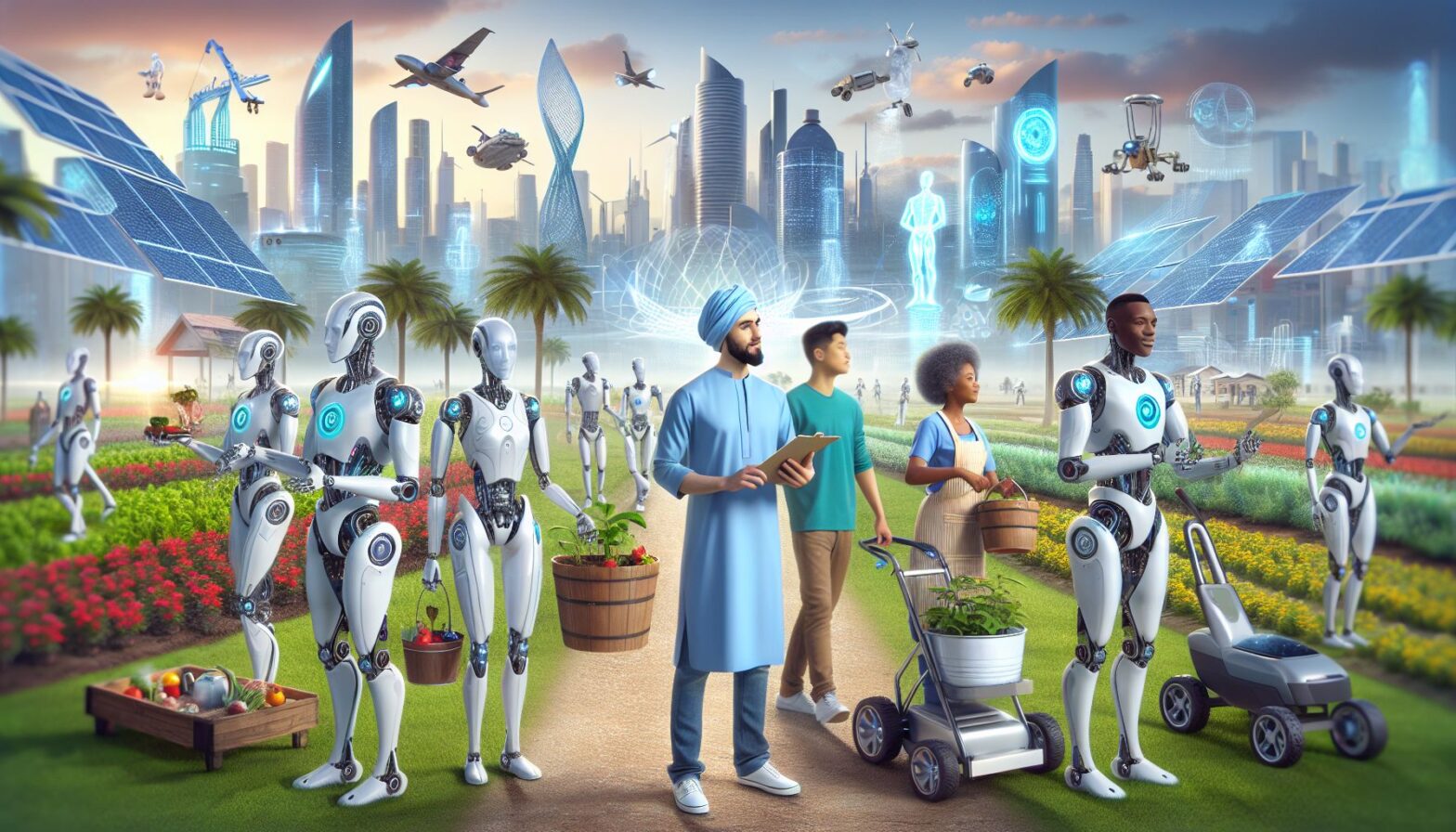
Hey techies and future-gazers! Today, I’m digging into robotics, and honestly, this field is changing so fast it makes my head spin. This could be the tech breakthrough we’ve all been waiting for. Picture a world where robots aren’t just handling the boring stuff but actually working with us to tackle humanity’s biggest problems. They’re not just our helpers anymore. They’re becoming our partners. So let’s spend some time figuring out what’s really coming next.

Robotics 2.0: Beyond the Assembly Line

The Old-School Robot: From Factory Workers to Dream Weavers

Remember when robotics meant those mechanical arms stuck on factory floors? Those were simpler times. The metal arms painting your car or putting together your iPhone? That’s just scratching the surface. Robotics has completely transformed and we’re looking at a total renaissance here. I’m talking about real problem-solving machines with flexibility, vision, and actual intelligence.

But why is this happening now? It’s the perfect storm. AI advances, tiny hardware, and cloud computing all came together at once. Think about it: robots are basically computers with arms and legs! And honestly, the possibilities feel endless.

Co-bots: Not Just Sidekicks

One of the coolest things happening right now is collaborative robots, or “co-bots.” These aren’t the creepy sidekicks from old sci-fi movies. They’re built to work with humans, not replace them. Imagine having a robot that actually gets personal space and helps you with tasks that are either too risky or mind-numbing for humans.

Healthcare, logistics, even entertainment industries are bringing in these friendly bots. Take hospitals: robots are delivering meds and supplies, cutting down contamination risks. In warehouses, they pick, pack, and ship orders way faster than humans ever could. Your next-day delivery addiction? Thank a robot.

The Robotics-AI Nexus: Building the Ideal Machine

Machine Learning: The Brain Behind the Brawn

AI algorithms are what make all this possible. Machine learning is the brain powering these mechanical wonders, creating robots that learn from their surroundings, adapt to new situations, and make split-second decisions. Think about sending an exploration rover to Mars that can make choices without waiting for Earth’s input. We’re making those sci-fi dreams real, one algorithm at a time.

Reinforcement Learning: Teaching Robots to Fish

You can’t talk robotics without mentioning reinforcement learning. It’s like teaching a robot to fish instead of just giving it fish. Rather than programming fixed instructions, you let it learn through trial and error. Those dancing Boston Dynamics robots? They didn’t start with smooth moves. They practiced. A lot.

Through reinforcement learning, robots are getting good at manipulating objects, navigating spaces, and even playing strategic games like chess and Go. The result? Machines that are genuinely good at solving problems, adapting quickly, and coming up with their own solutions.

The Techno-Utopian Promise: Robots to Save the World

Climate Change: Earth’s Robo-Saviors

Here’s where robotics gets really exciting: fighting climate change. Drones and autonomous vehicles are monitoring and tackling environmental problems way more efficiently than human teams ever could. Automated systems can track pollution levels, plant trees, or help clean up oceans. Picture fleets of ocean drones hunting down plastic waste and saving marine life. It’s not just wishful thinking anymore. This stuff is actually happening.

Healthcare: Scalpel-Precision and Human Compassion

Healthcare robots go way beyond those delivery bots. Surgical robots can handle complex procedures with incredible precision, speeding up recovery and improving outcomes. We’re looking at a world where surgeries aren’t just faster but safer, thanks to AI helping surgeons in real-time.

Robots are even breaking into mental health. AI-powered bots are doing preliminary therapy sessions and working with patients dealing with anxiety, autism, and loneliness. Sure, robots won’t replace deep human connection, but they’re becoming valuable first points of contact to support human professionals.

Longevity: Life Extension Isn’t Fiction Anymore

Using robotics and AI to crack aging and extend human life isn’t science fiction anymore. Companies like Calico and SENS Research Foundation are actively working on this. While robots might not have discovered the fountain of youth, they’re leading research into aging, disease prediction, and preventative healthcare.

From robotic patient care to AI analyzing data to predict health crises before they happen, this is technology genuinely improving human life.

Conclusion

There’s no denying it: current robotic advances aren’t just changing industries, they’re laying groundwork for a completely different society. And while we’re nowhere near having our own C-3PO butler, that idea doesn’t seem as crazy as it used to. Researchers, engineers, and innovators worldwide aren’t just building robots to fill gaps. They’re completely rethinking what our mechanical companions can do.

So there you have it! We’re looking at robots that do way more than just make tasks efficient. They actually improve our quality of life. While it’s tempting to get lost in these utopian visions, I think it’s important to remember that this “robotic revolution” isn’t some distant dream. It’s happening right now. Let’s embrace it responsibly and make sure we’re using this tech to actually build a better world.

Keep watching, because if history teaches us anything, robotics isn’t just going to meet our expectations. It’s going to blow them away completely.

The Best Car Insurance Company – Tips To Help You Find One

The best car insurance company will make you feel like you’re getting the most bang for your buck and actually help you understand how auto insurance works. They’ll pick up the phone when you call and won’t bombard you with sales calls every week. You might think you’ve found the perfect company at first, but then something goes wrong and suddenly you’re stuck in a mess you didn’t see coming. You need to know exactly what you’re signing up for before you put pen to paper. Here are some things about your car insurance company that might surprise you.

Take a close look at how much of your premium actually goes toward potential payouts. A big chunk of what you pay is really just overhead and profit for the company. You could be shelling out hundreds or even thousands of dollars every year in premiums. Most people know this money gets rolled into their monthly or yearly bill, but they don’t realize how little of it might actually cover their claims. Make sure the premium you’re paying actually reflects what your coverage is worth.

Another key thing is figuring out who gives you the biggest discounts. Every insurer has different discount programs, so it pays to shop around and see who can cut you the best deal. Many auto insurance companies offer discounts based on your age, whether you’re married, where you live, your driving record, and a bunch of other factors.

Are your premiums way too high? Young drivers usually get hit with higher rates because they don’t have much road experience. Insurance companies see them as risky bets, so they charge more. If you want to bring your premium down, consider taking a defensive driving course and keep your record clean. No speeding tickets, no accidents. Drive like your grandmother is watching.

Still in school? Then you should definitely sit down with your insurance agent and go through every possible student discount. Most companies have special deals for students like lower deductibles, good student discounts, and other perks. Don’t just assume you’re getting all the discounts you qualify for. Ask specifically what’s available before you buy your policy.

Think about whether you want the optional extras. Things like roadside assistance, collision damage waivers, and comprehensive coverage all cost extra. Each one has its own price tag, so research what they’ll actually cost you each month. Get quotes from several different companies to see who gives you the most coverage for your money.

Check both your driving record and credit score. If you’re young or you’ve had accidents or tickets, expect to pay more. But if you have clean credit and a solid driving history, you should see lower rates. If you’re not sure where you stand on either front, ask your insurance agent to pull both reports and explain how they affect your rates.

Pick the right deductible for your situation. This is what you pay out of pocket when you file a claim. Higher deductible means lower monthly payments, but you’ll pay more if something actually happens. Lower deductible means higher monthly costs, but less pain when you need to use your insurance. Choose based on what you can actually afford to pay if your car gets damaged. Follow these steps and you’ll find an insurance company that actually works for you.

What Is Umbrella Insurance?

What is umbrella insurance? Umbrella insurance is extra liability coverage that kicks in when your regular insurance limits run out. You’ll also hear it called an umbrella policy, and it’s popular with car insurance. It picks up the tab for accidents that fall through the cracks of your other policies. Insurance companies sell different packages depending on what you need.

There are two main types: general liability umbrellas and specialized ones that cover specific vehicles, buildings, or events. General liability protects you when other people get hurt or their stuff gets damaged, but your car wasn’t involved. Think medical bills for injured passengers, property damage (yes, even to your own car), personal injury lawsuits, and other liability headaches.

Here’s where umbrella policies get interesting. Many also cover your legal bills, lost wages, business interruption costs, and damage to your property. Some even extend to personal belongings like jewelry, artwork, and pricey collectibles. It really depends on what you’re willing to pay for.

Most umbrella policies are pretty specific about what they’ll cover. You might get one that handles accidental damage to your car and vandalism, while another covers personal injuries and legal costs from accidents that had nothing to do with your vehicle. Insurance companies often bundle these together at a decent price, or they’ll add extra coverage without making you buy a whole separate policy.

The minimum coverage amounts vary based on what kinds of incidents the policy covers. Here are the main categories that fall under umbrella protection:

Personal property gets the biggest chunk of coverage because your car and its contents are usually the most valuable things at risk. The liability protection depends on how much coverage your main policy already provides for the vehicle itself. This includes bodily injury, property damage, and personal belongings.

Vehicle damage is another big one. The thing is, protecting your car costs way less than actually replacing it if something terrible happens. That’s just the reality of car values versus insurance premiums.

Business interruption coverage matters if you use your vehicle for work. Some policies cover you when you buy a car, lease one, or operate it in certain areas. A few will even pay for business losses if your work vehicle gets damaged or stolen.

If you drive an expensive car that you don’t maintain well, your regular liability coverage might not be enough to fix or replace it. Umbrella coverage steps in when an uninsured driver damages your vehicle. This usually provides more than enough protection for these scenarios.

Here’s something that trips people up: liability coverage doesn’t include damage to other people’s vehicles. That’s typically what umbrella policies focus on. Sometimes people call the car owner’s liability insurance the “umbrella policy” instead of the manufacturer’s coverage. If you’re leasing a new car from a dealer, liability coverage usually comes with the rental agreement.

You might catch a break on premiums if your vehicle has safety or security features, immobilizers, or anti-theft systems. The fancier the security setup, the bigger the discount you can expect from most insurance companies.

Before you buy an umbrella policy for your car, make sure you actually understand what you’re getting. Read the fine print on limits and exclusions. Insurance companies can often adjust liability limits to match your specific vehicle, but you need to know about any restrictions that might affect your umbrella coverage.

Ways to Land the Three Act Structure

Three act storytelling makes
for one of the most popular ways to tell a story. You’ll find it in
short stories by Roald Dahl, books by Stephen King and James
Patterson, fables by the Grimm brothers, and nearly every other
story you can think of. It’s widely used because it works, and when
done right, it’s impossible to predict what finally happens in
the third act or how.

Getting
the third act of your story right matters more than you might think. If you’ve ever read a book that
had a great beginning or middle but a terrible, disappointing ending,
you know how frustrating that feels. As a writer, you don’t want to put your readers through that.

Here
are a few practical and easy ways to nail act three when you’re working with the three
act structure.

Classic
Bad Endings

What
makes for a bad ending? Any third act that doesn’t make the first two
acts feel satisfying. That’s it.

Endings
can be final conclusions or cliffhangers that leave a few
exciting loose ends for the reader’s imagination or the next story or
book in the series. Both work fine.

But
endings can’t be anything that makes the reader feel cheated about
how the story got there. They also can’t be completely predictable from the first chapter.

“When
he/she woke up, it had all been a dream” is one of the most
hated endings in fiction. It makes the entire journey feel pointless. “Obviously he/she did it” is equally bad
for a mystery story unless you have a damn good reason for making
your murderer the most obvious suspect.

Use
the Second Act Right

The
second act builds tension
toward your ending. For murders and mystery stories, it’s
where your protagonist investigates (or chases the villain,
whether or not the reader knows who they are yet).

The
second act is perfect for showing character growth and the journey itself. It’s also where you throw in conflicts that
distract your characters from their goal, or discoveries that
push them closer to the truth.

Red herrings, false leads, and misleading clues work great in
your second act. They keep the hero guessing and prevent
readers from figuring out where you’re headed.

When
done well, the second act of your story stays
unpredictable right up to the end.

Ending
Act Three

How
do you end a story effectively?

Some
endings are twists. Some are epic confrontations. Some
are quiet, emotional moments. Others leave a few loose
ends for the next book or for the reader’s imagination.

To
understand how story endings work, pick five
of your favorite stories and look at the last sentence or paragraph.
How does it end? What did the writer do throughout the story to set up that ending
without telegraphing it too early?

Then choose stories where you hated the ending. Look at these and compare them to the ones that worked. What makes them different? The three act structure takes practice to get right.

Twists
and Turns

Smart
twists and turns often make the difference between a forgettable story and one that sticks with readers. Not
every lead has to go somewhere useful. Dead ends and false trails
can send your hero in circles while keeping
your ending surprising.

The Facts on Buying the Best Mandolines

Figure out what features you need then find a slicer that meets those requirements. You’ll also want to look for a mandoline slicer with a cutting guard. When you’re using the right mandoline slicer, you’re working with a handy tool that’s built specifically for slicing and dicing. That’s what makes it the perfect mandoline slicer on the market. So it’s definitely the best mandoline slicer to buy. To help you find the right mandoline slicer for your needs, here’s what to consider about the top five best professional mandoline slicers.

The next thing to think about is blade type. Generally, the V-shaped blade will give you almost the same cutting experience as many of the best mandoline slicers on the market, at a decent speed. V-shaped blades give you the benefit of two diagonal blades, making them great for cutting softer produce too. The sharp V-shaped blades, positioned at the right angles help reduce stickiness and boost accuracy when cutting tougher foods. You don’t need a knife, cutting board, or any other tool!

Replacement blades can often be purchased for under $20 for most models and with proper cleaning and care, will last for years. Coarse blades work best for slicing chunks. Straight edge blades tend to give you a cleaner finished cut over time and offer a few extra decorative cuts for your fruits and vegetables.

What Is So Fascinating About Best Mandolines?

Plus, all the parts hinge and swing out, which makes it really easy to clean. Also consider the flat board mandoline that doesn’t give you a wide range of cuts but is mainly used when there’s one specific type of cut you’re going for, like julienne cut. Since each slice is the same size, you’ll be able to have evenly cooked food with great flavors based on the ingredient itself.

With the five different blades, you’ll be able to get any type of sliced fruits or vegetables. When you’re ready to make slicing vegetables easier than ever, and you want to improve how your meals look, then it’s time to buy a mandoline slicer to use in your own kitchen. You just need to put the food in the safety holder and slide it along the textured surface. When it comes to a great meal, presentation matters just as much as taste, and that’s why cutting your food perfectly is smart when you want to make a lasting impression. In return, you can save the extra dishes needed with a regular knife and cutting board combo AND still get more consistent results. Since there are so many recipes, it wouldn’t be practical to list all of them here. Because sweet potatoes are so versatile, there are tons of recipes available to you.

You just need to set up the unit for the cut you want. You’ll be able to enjoy up to eight functions in one piece of equipment. Surprisingly, you won’t find many of these features in similar or higher priced mandolines on the market. Once you understand the basic features available to you, you’ll be better prepared to buy a mandoline that’s perfect for your specific needs. The 3 thickness settings will also help you get the slices of food you want. In a budget range, there are also great options for a kitchen. So clearly, it’s the best professional mandolin slicer choice you can get at a reasonable price.

Prices have dropped over the past few years. Material is also an important factor. Whatever material it’s made from will affect the price, ease of cleaning, and how long the device lasts. There are several types on the market and there’s also a wide range of prices you’ll run into. Most of the models you’ll find on the market are made from plastic or stainless steel. The real advantage of the Norpro mandoline is that it’s very easy to clean.

Whether you want to find something budget-friendly or a more professional model, there’s a tool to meet your needs. There are quite a few brands offering excellent mandolins at different prices. Also, the product is dishwasher safe. Good quality of the mandolin ensures great sound that will last for longer periods. With the help of the razor sharp blade and the safety food holder, the mandoline’s performance improves significantly as the user will be able to cut food slices safely.

Choosing Good Credit Cards Without an SSN

Getting business credit isn’t as tough as you might think. You need to build business credit separately, keeping it distinct from your personal financial profile. The key is learning how to establish business credit as its own entity, completely separate from your personal assets.

Type of Credit Cards Without SSN

If you’re piggybacking on someone else’s credit, make sure that relative has solid credit scores. Both secured and unsecured options work for people with poor credit. You can keep your personal credit separate when it’s not tied to business cards. This matters because business troubles could tank your personal credit. Your personal credit will otherwise affect your business loan interest rates.

A credit card without an SSN needs certain features to work well. You can apply for a credit card without SSN, but it’s trickier than applying with an SSN. Chase used to allow applications without SSN, but they’ve stopped this practice.

Some cards offer contactless payment options. You can use credit cards to pay rent in many cases. Business credit cards make sense for several reasons. They operate independently, so your personal credit score doesn’t show up in business transactions. Prepaid business credit cards carry low risk for issuers since they don’t require personal guarantees or SSNs.

Getting the Best Credit Cards Without SSN

The card can help, but you need to be careful, Wright says. If you don’t have credit history, a secured credit card works well for building credit without an SSN. When applying for secured cards, stick with major banks. Most store credit cards don’t require personal liability.

What You Can Do About Getting a Credit Card Without SSN

Credit cards without SSN need specific features to function properly. Discover used to accept applications without SSN, but not anymore. With an ITIN, you can apply for credit cards at most banks. Just enter your ITIN where they ask for SSN.

Both card types require good business or personal credit. High-yield credit cards typically come from major banks. Most business credit cards require personal liability. Having a separate business credit card makes tax season easier since you won’t need to sort through mixed transactions.

US banks can be quite accommodating. Your next step might be getting an ITIN so you can apply online. Some banks offer secured credit cards with minimum limits. You can ask local banks or credit unions for guidance if you prefer smaller institutions. Many banks and credit card companies have alert services to notify you about unusual activity.

As a business owner looking for funding to grow your company, people often say you can’t get business loans without personal guarantees. First, your business must be incorporated or registered as a limited liability company to build business credit. Take a close look at how your business operates. You might want to separate your personal and business banking. Setting up your company correctly from the start matters more than you might realize.

If You Read Nothing Else Today, Read This Report on Credit Cards Without SSN

You can build a credit score without an SSN. You can also inherit credit scores from relatives with poor credit, so be careful. Rent reporting services, auto loans, car purchases with credit cards, and well-managed bank accounts can all help build your credit rating. Building your credit card score works best when you pay off balances to avoid penalties from your bank.

You don’t need an SSN to rent apartments, buy cars, or open bank accounts. Not having an SSN limits your credit card options and reduces your spending flexibility and consumer protections, but it doesn’t completely block you. You don’t always need an SSN for credit cards. If you can get your SSN soon, wait and apply for better cards (like Discover it) once you have it. F1 students can usually get SSNs without much trouble.