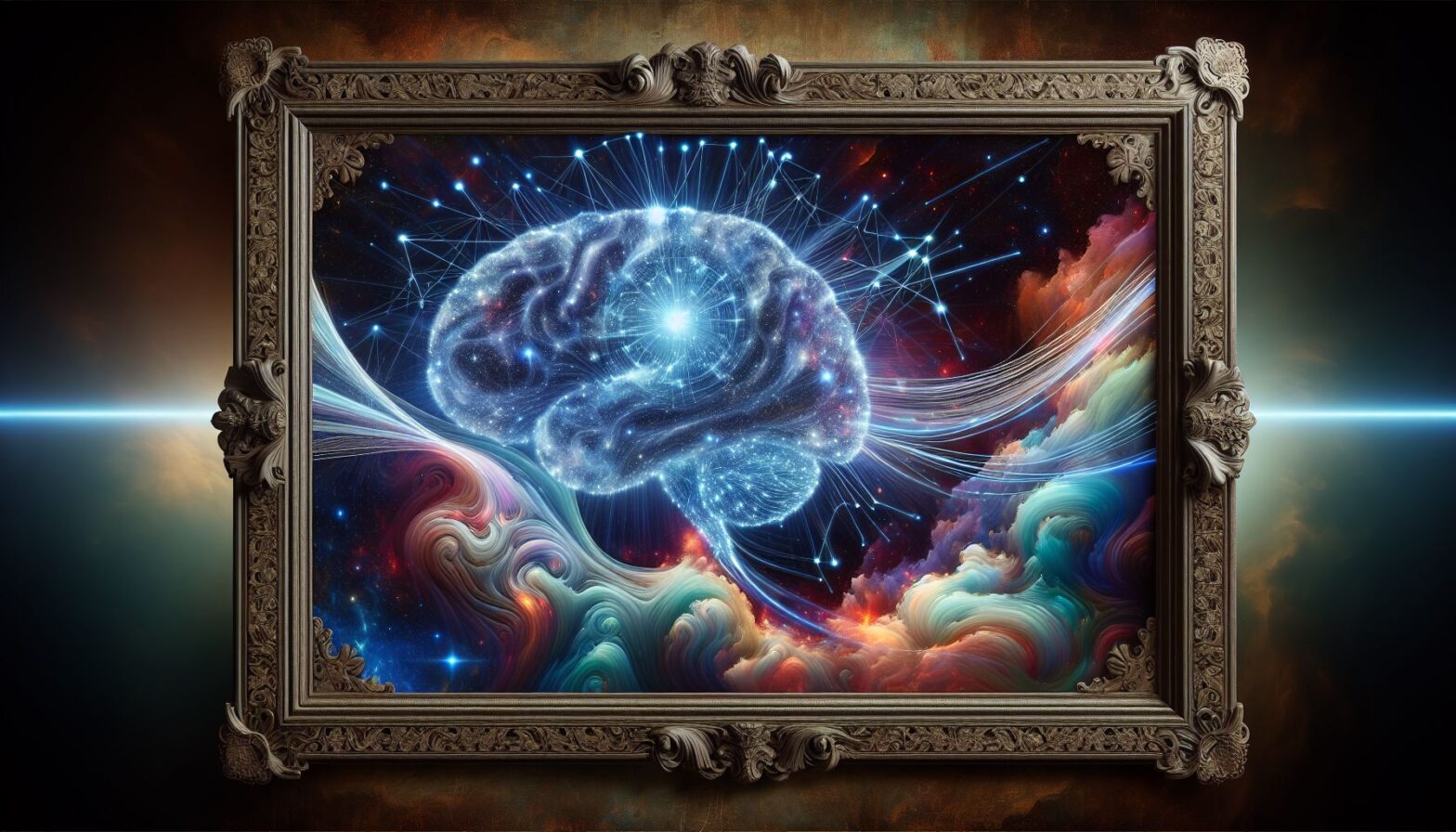
Hey tech aficionados and curious minds! 🙋♂️ Ever wondered what happens when mad scientists (in a good way, of course) blend the tech world with the arts? Yeah, I’m talking about Artificial Intelligence taking a leap into the realm of creativity. After years of being typecast as the geeky sidekick that does all the boring data crunching, AI is finally coming into its own, adding flair and pizazz to the world of art and music. Grab your favorite beverage and let’s dive into this electrifying topic!
Who Said Robots Can’t Paint?
Let’s face it, when we think about AI, we often imagine it doing complex calculations or running futuristic factories. But AI’s not just about numbers anymore. Lately, it’s become the digital Picasso we never knew we needed. Seriously though, there are algorithms out there that can create paintings, and not just any paintings, but ones that sell for millions.
Take, for example, the famous artwork created by an AI called “Edmond de Belamy” which was auctioned for a whopping $432,500 at Christie’s. Mind-blowing, right? What’s captivating here is how AI learns from thousands of existing artworks to create something uniquely its own. It’s as if AI has a soul, or at least an appreciation for fine art.
Making Music with Machine Learning
Now, onto another creative frontier: music. If you thought AI couldn’t jam, you’d be in for a surprise. Some people were skeptical about AI’s ability to write a catchy tune. But guess what? AI is doing just that!
A key player on this stage is OpenAI’s MuseNet, a deep neural network that generates 4-minute musical compositions with 10 different instruments. It’s capable of hitting every note spot on and even mimics the styles of renowned composers. From Beethoven to The Beatles, MuseNet can adapt and innovate so fluidly that it’s almost as if it’s having a full-fledged jam session with the maestros themselves.
The Marriage of Pixels: AI in Film and Animation
Ever had a creative idea in your head so big it needed blockbuster-level special effects to express? Enter AI! It’s revolutionizing the film industry by making CGI more accessible and realistic. Tons of movies today use AI for everything, from creating digital characters to enhancing VFX sequences.
One standout example is the use of AI to de-age actors. Think of a young Robert De Niro in “The Irishman.” The magic here rested on AI systems trained on mountains of visual data, allowing filmmakers to warp time itself without breaking a sweat. It’s like Benjamin Button with an upgrade, rejuvenation in high definition!
Bridging the Language Barrier, Poetic AI at Work
Let’s not leave out the wordsmiths! AI components, like natural language processing algorithms, are crafting compelling narratives, poetry, and even entire novels. The tool dubbed ‘GPT-3’ by OpenAI is quite the word magician, capable of spinning stories with such coherence and style that it’s easy to forget it’s a machine behind the keyboard.
Sure, AI’s not quite ready to pen the next Hemingway classic, but it’s getting pretty close. Imagine the day when AI co-authors your favorite sci-fi novel. Fascinating, isn’t it?
The Big Picture: Implications of Creativity in Code
While it all seems like a sci-fi dream come true, these AI developments raise thought-provoking questions. What does it mean for artists? Is AI an enriching companion or a threatening rival? There’s no denying that technology forces us to rethink creativity, a domain once thought to be quintessentially human.
In this changing world, my optimism rests in a collaborative future. Picture artists and AI working hand-in-hand, the latter working as an unusually talented paintbrush or musical instrument that expands our creative horizons.
Peeking into the Future: What Lies Ahead?
Looking forward, it’s anyone’s guess how far AI will push the boundaries of creativity. I imagine a future mixed reality art exhibit where AI-generated masterpieces evolve in real-time, responding to the viewers’ emotions captured through wearable tech. Possibilities are endless, limited only by our imaginations.
Until then, keep your AI art tools sharp (or at the very least fully charged) and your creative juices flowing. As they say in the tech world, “The future’s so bright, we gotta wear shades”, AI-generated shades, no doubt. 😎
Stay curious, stay creative, and most importantly, stay human!
P.S. Leave a comment below if you think an AI could paint like Van Gogh or would like to try creating music with MuseNet. Let’s ignite a conversation because who doesn’t love a good debate about robots taking over the art world?