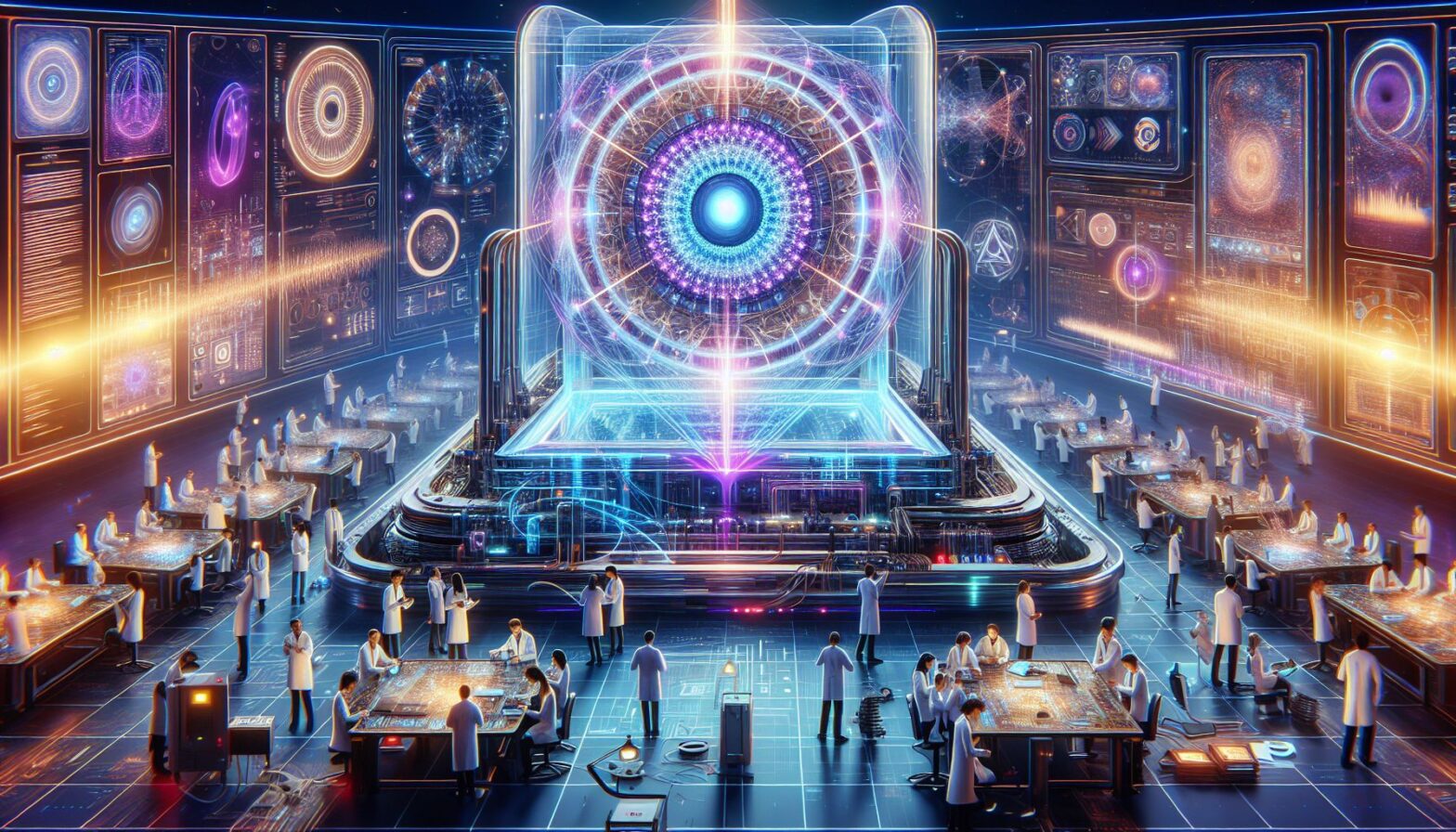
Hey tech enthusiasts! Today, I’m diving into a topic that feels ripped right out of a sci-fi novel: quantum computing. If you haven’t heard much about it yet, don’t worry. It’s one of those technologies that hasn’t quite made it into our everyday conversations yet, but I think it’s going to completely flip how we think about computing. So grab your favorite caffeinated beverage, settle in, and let’s geek out together.
What Exactly is Quantum Computing? 🤔
Alright, so imagine your classic computer. You know, the one sitting on your desk processing a mind-boggling number of zeros and ones. These binary digits (bits) make up the entire language of your computer. But quantum computing? It’s like a rebellious teenager who doesn’t just stick to 0 or 1. Instead, it works with qubits, which can exist in multiple states at once thanks to the weirdness of quantum physics.
This phenomenon is called superposition. In simple terms, while a classic bit is like a soldier—either at attention (1) or at ease (0)—a qubit can be in multiple states simultaneously. It’s like having a quantum superhero juggling identities, which lets quantum computers handle complex computations at speeds that make today’s supercomputers look like they’re crawling through molasses.
Recent Breakthroughs: Are We There Yet?
Let’s talk about what’s actually happening in the quantum computing world right now. Companies like Google and IBM are racing for quantum supremacy, and honestly, it’s pretty wild to watch. Remember in 2019 when Google announced its 53-qubit Sycamore processor had achieved quantum supremacy by completing a task in mere minutes that would take a classical supercomputer over 10,000 years? If that doesn’t get your sci-fi senses tingling, I don’t know what will.
IBM isn’t sitting on the sidelines either. They have quantum computing systems you can actually access through the cloud. They’re basically opening the doors for developers, researchers, and curious people like you and me to test quantum processing without needing a PhD in advanced physics.
And then there’s D-Wave Systems. They’re pioneering quantum annealing, which is a different approach that’s making waves across sectors like logistics and pharmaceuticals. Imagine optimizing traffic systems in the blink of an eye or completely changing drug discovery by modeling molecules with precision we’ve never had before. That’s what D-Wave is working on.
Potential Applications: Unlocking New Realities
So with all this power comes some pretty mind-blowing possibilities. The implications of quantum computing are honestly staggering. Here are just a few:
1. Pharmaceuticals and Health 🧬
Regular computers struggle to simulate how molecules behave—it’s like trying to perform Shakespeare while learning basic English. Quantum computers, though, could simulate molecular interactions with incredible detail, which could speed up drug discovery and personalize treatments in ways we’ve only dreamed of.
2. Cryptography: The New Security Paradigm 🔐
In a quantum future, data encryption will completely change. Once quantum computers get powerful enough, encryption methods that are nearly unbreakable today might become as simple as kindergarten math. The cybersecurity world will need to invent new quantum-resistant strategies, which could create an entirely new field of IT security.
3. Logistics: The Global Optimization Puzzle 🚚
Picture solving urban traffic nightmares or the complex puzzle of global supply chains with quantum-powered algorithms. Companies like Volkswagen are already excited about the possibility of untangling traffic congestion faster than you can remember your old phone number.
4. Artificial Intelligence: Brain Power 2.0 🤖
AI could use quantum power to process massive amounts of data with lightning speed, accelerating learning processes and improving decision-making in everything from self-driving cars to deep learning models that would make even experienced data analysts sweat.
Challenges: A Quantum Leap Isn’t Easy
Now, before we all get carried away with utopian daydreams, let’s pump the brakes because quantum computing has some serious challenges. Keeping qubit states stable in real-world conditions is like spinning plates while juggling—incredibly difficult and high stakes. Decoherence (when quantum information just disappears) is a persistent problem that scientists are constantly battling.
And scalability? That’s a whole other beast. Building systems with tons of qubits that work together without falling apart from environmental interference is like conducting a symphony orchestra in the middle of a hurricane.
Future Outlook: Where We’re Headed
So where are we going with all this quantum stuff? Most experts think we’re still about a decade away from widespread implementation. But once we get there, it’s expected to transform industries from finance to entertainment. I guarantee that future tech conversations will include “qubits” right alongside “blockchain” and “AI.”
It’s an incredibly exciting area of technology, similar to the space race or the early days of the internet. So buckle up and enjoy the ride because quantum computing is going to change our reality one mind-blowing breakthrough at a time.
Conclusion: Welcome to the Quantum Club 🎉
If you, like me, started this read with only a vague idea of what quantum computing was about, I hope you’re now properly intrigued. I can promise this won’t be the last we hear about quantum developments. Share your thoughts, comments, or wild theories about the quantum frontier with me. Who knows—maybe we’ll figure out teleportation next (a humble geek can dream)!
Until the next tech adventure, stay curious and don’t forget to get some analog sunshine every now and then. Cheers!