The Quiet Arrival of Something That Actually Matters
Amazon dropped Aurora DSQL at re:Invent last December with the kind of restraint you rarely see from AWS. No massive keynote fanfare. No ten thousand engineers in an auditorium losing their minds. Just a straightforward engineering announcement: they built a distributed SQL database that does multi-region active-active replication without the architectural gymnastics everyone’s been doing for the past decade. I’ve spent enough time in the trenches with distributed systems to know when to pay attention, and this warranted a close look.
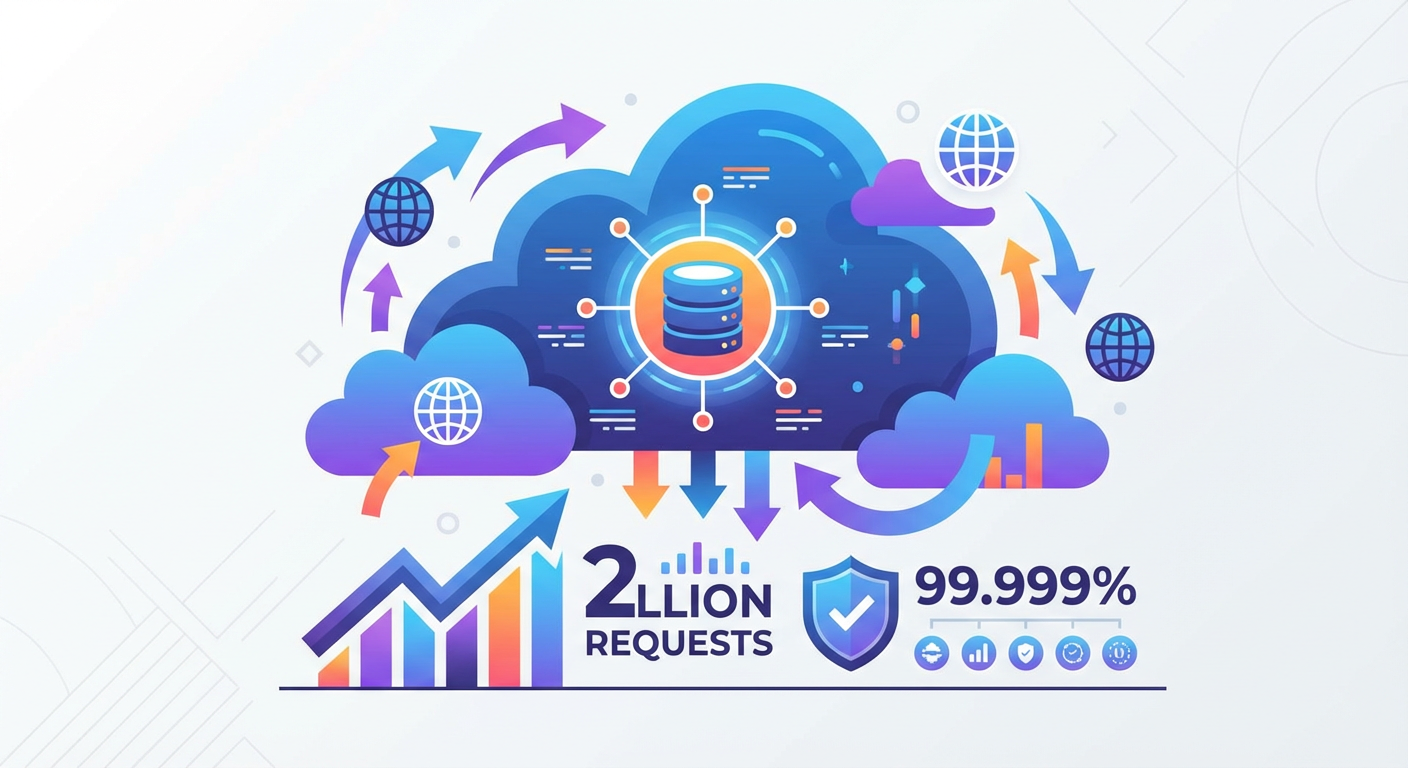
The core claim hits different because it’s narrow enough to be credible. Ninety-nine point nine-nine-nine percent availability across multiple regions. No read replicas as a workaround. An external transaction log separated from the storage layer, using optimistic concurrency control instead of the traditional MVCC implementations that have dominated since PostgreSQL made it standard. They’re claiming up to 40 percent latency reduction in cross-region write scenarios. These aren’t vague marketing promises. These are architectural decisions with measurable consequences.
Since reaching general availability in Q1 of this year, Aurora DSQL is live across four AWS regions at starting rates of fifty cents per DPU-hour. That pricing puts it squarely against CockroachDB Dedicated and Google Cloud Spanner. This isn’t competing on the margins anymore. This is a direct confrontation with databases that have been solving this problem for years.
The Technical Architecture That Changes the Game
To understand why this matters, you need to understand what makes distributed SQL actually hard. Traditional databases use Multi-Version Concurrency Control. Writers create new versions of data. Readers see consistent snapshots. Everything stays relatively sane because the database engine manages it all in one place. Scale that across regions, and you hit the wall immediately. You need coordination. You need consensus. You need synchronous replication or you lose the ACID guarantees that made SQL valuable in the first place.
Aurora DSQL flips the problem. Instead of MVCC happening at the storage layer, they’ve externalized the transaction log. Storage nodes remain replicas of the same data. Concurrency control runs optimistically at the query layer. When conflicts occur, the transaction log arbitrates. This is genuinely different from what Spanner does with its TrueTime protocol and atomic clocks, and different from CockroachDB’s approach with Raft consensus and clock skew tolerance. Different doesn’t automatically mean better. But different in a way that reduces cross-region write latency by forty percent deserves investigation.
The architectural consequence is simple but significant. Write operations don’t require synchronous replication across regions to maintain consistency. The transaction log provides the ordering guarantee. Storage can catch up asynchronously. This breaks the latency wall that’s existed since we started thinking seriously about globally distributed databases.
The Competitive Landscape and What It Reveals
Google Cloud Spanner hit 99.999 percent availability years ago. They’re processing over two billion requests per second globally across all customers. These aren’t theoretical numbers. These are operational facts from a 2024 presentation at Google Cloud Next. CockroachDB has built a real business on the same 99.999 percent promise. Both have battle scars from production deployments. Both have customers who depend on them for mission-critical infrastructure.
What changed is market readiness. Gartner’s 2025 Magic Quadrant for Cloud Database Management Systems identified distributed SQL as the fastest-growing segment. Adoption increased thirty-eight percent year-over-year among Fortune 500 companies. This isn’t enthusiasm for a novel idea anymore. Enterprises are recognizing that the old patterns don’t work. Sharding doesn’t scale operationally. Read replicas don’t solve write distribution. Multi-master replication creates more problems than it solves.
Aurora DSQL enters a market that’s ready for it. That’s different from Spanner, which spent years educating the market. That’s different from CockroachDB, which built adoption one skeptical DevOps team at a time. AWS has the distribution advantage. They have the operational credibility. Organizations already running Aurora have psychological momentum toward the Aurora ecosystem.
But competitive advantage built on distribution and credibility is fragile. Spanner and CockroachDB have years of hardening behind them. They have customers who’ve pushed them to the edge and survived the experience. Aurora DSQL has deployment history in AWS’s own infrastructure, but production deployments at enterprise scale tell different stories than laboratory conditions.
Where the Skepticism Lives
I’ve watched distributed systems fail in production too many times to accept claims uncritically. The optimistic concurrency control model works beautifully until your conflict rate exceeds design assumptions. Then performance drops off a cliff. The external transaction log adds architectural complexity, and more complexity means more failure modes. The forty percent latency reduction matters only if it’s consistent across all workload patterns, not just synthetic benchmarks.
AWS’s track record with Aurora is good. Genuinely good. But Aurora was built iteratively. DSQL is being introduced into production at scale. There’s a real difference between “we’ve deployed this in controlled environments” and “we’ve maintained this in production through entire quarters of unexpected traffic patterns.”
The pricing at fifty cents per DPU-hour is competitive with Spanner and CockroachDB Dedicated, but pricing wars rarely matter as much as operational risk. Organizations don’t switch databases for marginal savings. They switch for capabilities they can’t get elsewhere or for costs they can’t sustain. Aurora DSQL needs to demonstrate it’s not just a copy of existing solutions. It needs to prove the architectural choices actually improve production experience.
Practical Implications for Your Architecture
If you’re currently scaling with sharding strategies or multi-master replication patterns, Aurora DSQL deserves a technical audit. If you’re already invested in the Aurora ecosystem but frustrated with cross-region write latency, this is worth a serious pilot. If you’re building new infrastructure that requires true global consistency with acceptable latency, the three-way comparison between Aurora DSQL, Spanner, and CockroachDB Dedicated has become genuinely interesting.
Start by reviewing the Amazon Aurora DSQL product page and the detailed AWS re:Invent 2024 Aurora DSQL announcement. Read the technical documentation. Run the benchmarks yourself against your actual workloads. Don’t rely on the numbers in marketing materials. Build a test harness that replicates your conflict patterns and query shapes.
The practical test is straightforward. Can Aurora DSQL maintain latency consistency under your expected conflict load across regions? Can you operate it with the same skill set you already have? Can the cost structure work for your scale? If all three answer yes, you’ve found your database. If not, you’ve validated that your current approach is actually the right one.
We need to move away from accepting claims because they come from large vendors, toward evidence-based evaluation of actual production requirements. Aurora DSQL might be exactly what distributed systems have been waiting for. Or it might be a solid incremental improvement that doesn’t justify migration complexity. The only way to know is to test it against your own reality. What’s your experience been with distributed database choices? Have you evaluated Aurora DSQL yet?